The United States Space Program and its Place in History?
Originally published on my space art website in 1995. Still holds true today; now more than ever.
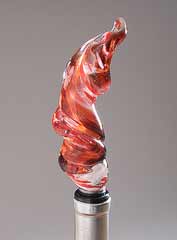
Each time I observe or participate in a spacecraft launch I wonder at all that we have been able to do with The Technology of Fire.
This earth is born from the cauldron of the stars.
All of the elements that are in it
were formed in those intense fires.
We have a fire inside that burns ever so gently
in comparison with the stars.
It is the same fire, but it burns in a very special way.
We are born from this earth.
We rise up out of it and walk around,
soon to return to its womb.
All of the elements within us are scattered
throughout the Universe.
We are the Universe come to contemplate itself.
Read more... (872 words, 1 image) Tags: legacy, perception, perspective, technology
Or is it the other way around? Every so often, I receive queries in my mailbox asking about various topics. Today, I was asked a question about the path that I took and how it affected my life’s work:
“I am a freshman at Brigham Young University Idaho, and I’ve wanted to be an artist all my life. However I’ve never had any problems with math or science and love problem solving. My brother informed me that I might look into engineering rather than art. I really do like the idea however here is the problem, I LOVE ART, and I don’t know what field of engineering I could go into that would involve both. How did you get started? Was it as an artist or an engineer? I really need some advice. Please help.”
Often an interesting conundrum. Interesting enough that I decided to answer as a blog post, so that many folks might benefit.
Read more... (1684 words, 5 images) Tags: art and science, diversity, focus, perception
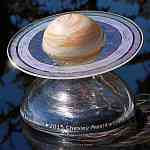
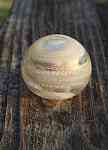
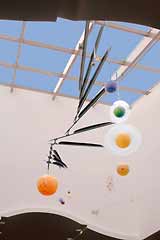
Next, we'll move into the process of creating the blown glass planets and Sun. The planets are supported by curved, hollow carbon fiber arms; the longest being 3 feet (1m), so the orbs must be very light. Just as in the Celestial Winds Blown Glass and Carbon Fiber Mobiles that we make, that have arms as long as 20 feet (6m), saving every ounce of mass that is way out on the end is very important. You’re probably asking why we choose to pay that mass penalty when plastic could be used instead. Answer is simple:
"There’s nothing quite like glass."™
Read more... (1532 words, 11 images) Tags: art and science, astronomy, glassblowing, hot glass
A colleague in England posted today that he had a harrowing experience varnishing a painting when the varnish began dissolving some of the paints and started spreading them across the rest of his painting.
I’ve always dreaded the varnishing operation. You painstakingly coax every individual millimeter of a work to get them all to sing together in concert and it’s finally finished. Then, you risk the whole darn thing on one swell foop by having to apply a substance that ubiquitously affects the entire thing all at once.
Two similar disasters come immediately to mind.

The Third Airborne Tank Division
Read more... (920 words, 2 images) Tags: disaster, varnish
Every so often, I receive queries in my mailbox asking about various topics. Today, I was asked an astronomy question that intrigued me:
"Under enormous magnification, such as the HUBBLE – WHY ON EARTH don’t individual stars, when focused on, look absolutely ENORMOUS. I mean – focus on a GALAXY, and you see an object otherwise ‘apparently’ tiny, blown up to be quite visible in detail. However I have yet to see a SINGLE IMAGE of ANY star, that makes it look even REMOTELY like our SUN. Please explain to my satisfaction and I will be DELIGHTED."
This is perhaps a not so uncommon misconception. So, I set about to compile the answer, replied in detail and I share it with you here:
Read more... (745 words, 3 images) Tags: distance, galaxy, Hubble, nebula, relative, space, star, telescope, universe
I ran across a couple of articles today, one by Paul Gilster of the Tau Zero Foundation on Centauri Dreams entitled Space Art: Reviving the Imagination and another by Jeff Foust of The Space Review on When Space and Art Intersect. It’s really good to see the resurgence in this area in so many circles and I thought I’d take a little break from The Making of the 21st Century Orrery series and get back to my original passion that started all this — Space Art. That is, Space Art in the classical sense that people know it; 2D paintings.
Read more... (975 words, 6 images) Tags: 3D model, art and science, engineering, imagination, space, visualization
Glass. It’s captivating. It’s mesmerizing. Attempted by many; mastered by only a few. It can be a harsh teacher. Working with it is exhilarating and humbling. It requires planning and intense concentration, while at the same time also requiring one to being open to the serendipitous. It’s unmatched and worth every effort.
Read more... (1201 words, 10 images) Tags: art and science, astronomy, cold-working, glass casting, glassblowing, hot glass
This being one of our larger productions—but not the largest by far—we thought we’d give you a peek into what went into building this creation. We know that a lot of our stuff is in a Black Box but decided that this time we could crack the lid a little.
As you read in the previous post, we begin all of our commissions with a detailed, full scale 3D engineering model. This allows us to fully realize the design before commencing construction, know what it’s going to look like, and it affords a complete set of high resolution dimensioned parts that can be separated out and built that we know will fit. (I don’t like surprises.)
Read more... (809 words, 10 images) Tags: 3D model, astronomy, cabinetry, wood carving, wood turning, woodworking
It’s always good when a project is finished; even better when it’s a success, better yet when it’s never been done before and the top when someone almost inevitably says: “You can’t do that!”
The bonus prize is doing it under severe adversity and not caving. Kinda like beating yourself in the head with a ball peen hammer, ‘cuz it feels so good when you stop.
Orrery, Orrery…? Fun to say, don’t you think?
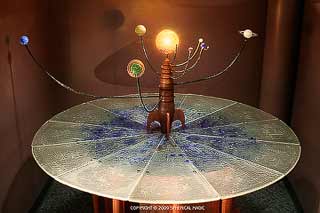
What’s an orrery, you ask? Well, it’s a model… of something really big. Stick around and you’ll learn how big.
Read more... (2030 words, 11 images) Tags: 3D model, art and science, art glass, astronomy, carbon fiber, engineering, glassblowing, space, wood carving, woodworking
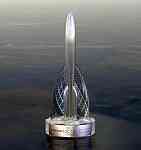
Now you can have one of your own. In blown glass, no less, with a flame and everything. This is the sixth in a series of Steampunk Rockets that has been a big hit. Who knew!?
We’ve got a couple of big ones that are really retro Buck Rogers, Flash Gordon rockets with bulbous bodies and curvy, super-pointed noses that will be coming along in the next few weeks. They’ll be about 10 inches (24.4 cm) tall when complete. This latest one is 3-finned, 6.5 inches (16.5 cm) tall and is really cool; with ribbed fins and tiny oval windows.
Read more... (266 words, 1 image) Tags: 50's, award, Bonestellian, glassblowing, retro, science fiction, space, steampunk